
- Why MIPS Scoring Is More Nuanced Than It Looks
- Measure Selection Is Where Strategy Begins
- Improvement Activities and Interoperability: The Categories People Undervalue
- Real-Time Analytics Change the Game
- Building for the Long Term, Not Just the Current Year
- What MIPS Looks Like in 2026 and Beyond
- The Role of Technology in Performance-Driven MIPS
- MIPS Is a Tool, Not a Tax
Many practices view MIPS as a mere compliance chore, similar to a fire drill, and consequently miss out on significant revenue. While designed to ensure provider accountability, the Merit-based Incentive Payment System also rewards high-quality, efficient care. Viewing it solely as a burden ignores the incentive half of the program.
Securing meaningful payment adjustments depends more on strategy than clinical skill alone. By mastering scoring mechanics, selecting high-impact measures, and utilizing real-time tracking, practices can transform MIPS from a source of dread into a beneficial asset for the entire organization.
Key Takeaways
- MIPS is scored across four weighted categories, and optimizing each one compounds your overall performance.
- Practices that choose measures strategically, not just based on familiarity, tend to score significantly higher.
- Real-time data and analytics tools remove the guesswork from MIPS reporting before it’s too late to course-correct.
- Quality and cost are the highest-weighted categories, but Improvement Activities and Promoting Interoperability also carry meaningful impact.
- MIPS participation is linked to both penalty avoidance and bonus eligibility, making it worth optimizing well beyond the minimum threshold.
Why MIPS Scoring Is More Nuanced Than It Looks
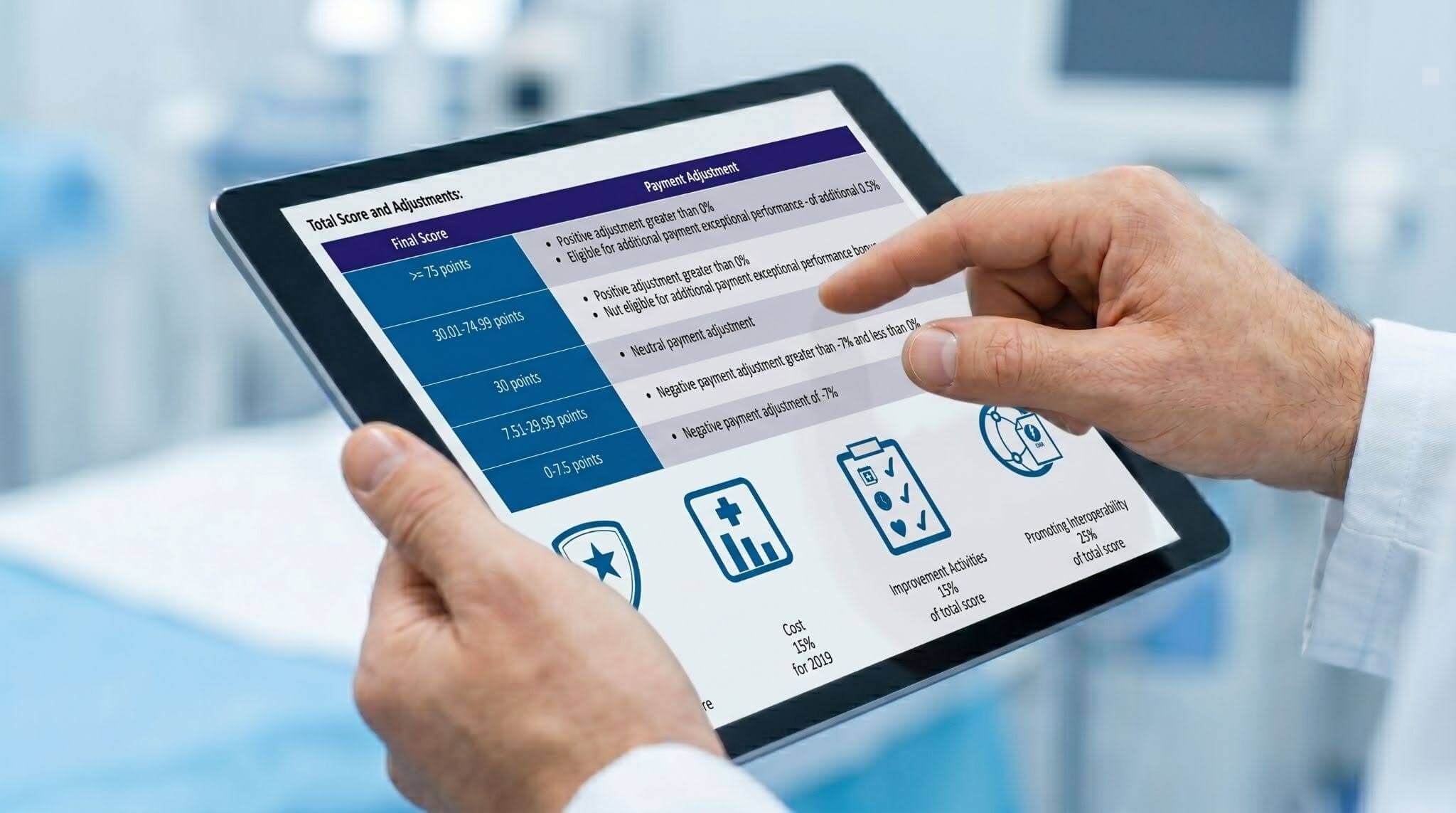
MIPS scores are calculated across four weighted categories (Quality, Promoting Interoperability, Improvement Activities, and Cost), with Quality and Cost now carrying equal weight. Because Cost is calculated by CMS from claims data, a good Quality score alone isn’t enough; understanding how all four categories feed into the final score is the foundation of a real MIPS strategy. For more background, see MIPS benefits and alternative payment model incentives, which explains the program’s design to reward performance improvement alongside compliance.
Related: The 3 Most Effective Ways to Improve Your MIPS Score This Year
Measure Selection Is Where Strategy Begins
Selecting quality measures is a high-leverage decision often overlooked. Instead of defaulting to familiar or easy measures, providers should ensure their choices align with their patient population and performance history.
Top practices use benchmark data to find specialty-specific measures with better scoring thresholds. By considering QCDR-relevant workflows and ensuring robust data collection, they prioritize high performance over minimum compliance.
If you’re wondering whether your current approach holds up, it’s worth taking a closer look at how you’re redesigning MIPS quality reporting strategy to make sure your measure set is built for performance and not just compliance.
If you’re not sure where to start, Patient360 has built out a detailed resource on maximizing MIPS scores: strategies to optimize performance in 2025 that walks through the specific steps practices can take to improve their standing before the reporting period closes.

Improvement Activities and Interoperability: The Categories People Undervalue
While Quality is often the primary focus, Improvement Activities and Promoting Interoperability contribute significantly to final MIPS scores. Improvement Activities reward practices for existing efforts like care coordination and patient engagement, provided they are properly documented.
Promoting Interoperability centers on using certified EHR technology for data exchange and patient access. Many practices miss potential points by underutilizing their systems. Integrating EHR data with an analytics platform can simplify this process and maximize scoring.
Related: Why QCDRs Are Essential for MVP Reporting Success
Real-Time Analytics Change the Game
Practices often fail by assessing performance too late in the year when course-correction is no longer possible. Discovering low quality scores in November leaves insufficient time to improve data before the submission deadline.
Real-time tools provide year-round visibility across every MIPS category, enabling timely adjustments to underperforming measures or incomplete documentation. This transforms MIPS from a year-end scramble into a proactive management process.
The move toward more integrated reporting is already underway. Practices can get a clearer picture of what’s coming by reviewing the analysis on breaking down the 2026 QPP final rule, which outlines the key MIPS and ACO updates that will shape reporting requirements in the next cycle.
For practices that want a clearer picture of what a full-service reporting platform looks like, Patient360’s MIPS solution overview outlines how their software supports data aggregation, real-time scoring, and quality benchmarking for practices of all sizes.

Building for the Long Term, Not Just the Current Year
Strategic practices focus on long-term infrastructure, not just immediate adjustments. By integrating EHRs with reporting platforms, training staff, and choosing goal-aligned measures, they simplify future reporting.
As CMS shifts toward outcomes-based metrics and MIPS Value Pathways, practices that master these requirements now will be better positioned for a maturing regulatory environment.
Part of that preparation means understanding the broader context of maximizing benefits of MIPS, including how incentive structures interact and where the biggest opportunities lie for different practice types.
What MIPS Looks Like in 2026 and Beyond
Regulatory changes are already in motion for the next performance cycle. CMS has finalized updates that will affect measure weights, reporting thresholds, and the structure of MIPS Value Pathways. Practices that are still treating MIPS as a static annual task will find it harder to adapt as these changes take effect.
Staying informed on MIPS reporting in 2026 helps practices prepare their reporting infrastructure for upcoming changes.
Understanding where the program is headed matters as much as optimizing for where it is now. Practices that combine strong current-year performance with forward-looking strategy will consistently outperform those that treat MIPS as a checkbox.
The Role of Technology in Performance-Driven MIPS
Successful MIPS performance requires infrastructure to aggregate data and calculate scores accurately. Manual reporting is inefficient and risks errors that can lower your final score. As CMS focuses on modernizing MIPS for a digital future, practices using tech-forward reporting will adapt more easily to new API-based and electronic quality measure standards.
MIPS Is a Tool, Not a Tax
Practices treating MIPS as a performance program consistently earn rewards. Success requires strategic measure selection, real-time data visibility, and a platform that minimizes clinical burden. Patient360 provides the tools and support to turn MIPS into a competitive advantage. The right foundation simplifies optimization for any reporting year.